Oddity Stock Drops 50%: Causes and Impacts on Beauty Brands

Oddity Tech Stands Out Uniquely in the Beauty SectorOddity Tech has a name that perfectly captures its distinctive position within the beauty industry. Throughout its existence, it has differentiated itself significantly, avoiding classification as either a pure technology firm or a conventional pro
Oddity Tech Stands Out Uniquely in the Beauty Sector
Oddity Tech has a name that perfectly captures its distinctive position within the beauty industry. Throughout its existence, it has differentiated itself significantly, avoiding classification as either a pure technology firm or a conventional product brand. Instead, it operates as a highly efficient performance marketing powerhouse, characterized by its bold, extravagant approach to cosmetics and makeup products.
As the parent organization behind popular brands such as Il Makiage, SpoiledChild, and MethodIQ, Oddity has also carved out an unusual path in the public financial markets. During a period marked by scarce initial public offerings in the beauty space, the company successfully launched on the stock exchange in 2023, achieving a substantial valuation of $2.7 billion. It managed to raise approximately $424 million through an offering that was heavily oversubscribed, with its share prices surging by about 35% right from the opening day, reaching around $48 per share. In the subsequent year, the stock price fluctuated between the high $30s and mid-$40s, before advancing into the $60 to $70 range during 2025. This upward trajectory coincided with the company posting record-breaking sales of $810 million, accompanied by an impressive gross margin of 72.5%.
However, everything changed dramatically on February 25, when the company's stock value plummeted by roughly 50%, dropping to the mid-teens range. This sharp decline followed Oddity's announcement that its first-quarter revenue would contract by about 30%. This was a stark contrast to analysts' expectations of sustained growth between 10% and 15%, as well as the company's own performance in the previous year, which saw quarterly revenue increases ranging from 24% to 27%.
The abrupt downturn was not triggered by any decline in consumer demand. Rather, it stemmed from a major interruption in the customer acquisition system that had been the driving force behind Oddity's rapid expansion. This event has sparked widespread discussions throughout the beauty and direct-to-consumer sectors regarding the vulnerabilities of other companies and the strategies they might employ to mitigate similar risks.
In collaboration with Ayal Pascal, who serves as the head of beauty at the consultancy and accelerator firm Bold Brands Co., and who also created the beauty marketing tactics publication Beauty MarketingIQ while previously holding the role of VP of marketing and product development at Allies of Skin, we delve deeply into the specifics of the disruption that led to Oddity's challenges. We explore key takeaways for other beauty brands and assess the potential for Oddity to recover and regain its momentum.
The Core Mechanism Driving Oddity's Expansion
Central to Oddity's business strategy is its innovative Try Before You Buy (TBYB) framework, meticulously crafted to eliminate the common hesitations consumers face when purchasing beauty products online—items that traditionally require physical interaction before commitment. Under this system, buyers do not need to pay upfront; instead, they receive the product at home, test it in their daily routine, and are billed only if they choose to retain it after trial.
In one of his Beauty MarketingIQ publications focused on Oddity, Pascal elaborates that this method leverages a psychological principle known to behavioral economists as ownership bias. Once a product is physically present in a customer's possession and integrated into their habits, the act of returning it demands additional effort, making the decision to keep it the more natural and default choice.
During its latest earnings report, Oddity revealed that nearly 70% of its 2025 revenue was derived from repeat purchasers. Furthermore, the company's cohort repeat rates surpassed 100% over a 12-month period, a clear indicator that loyal customers were not only returning but also ramping up their spending with each subsequent purchase cycle.
Pascal highlights that the TBYB approach shines brightest in product categories where online shopping evokes caution among consumers. These are the areas where buyers often insist, 'I must examine this item in person before committing.' Foundation products represent the quintessential example of such a category, perfectly suited for this model.
For Il Makiage, which specializes in foundation offerings, the TBYB system has demonstrated exceptional effectiveness. When combined with its sophisticated shade-matching quiz—drawing from hundreds of thousands of data points spanning more than 700 unique skin tone variations and completed by over 25 million users—the brand transformed a segment long reliant on in-store try-ons into a highly efficient, scalable online customer acquisition powerhouse.
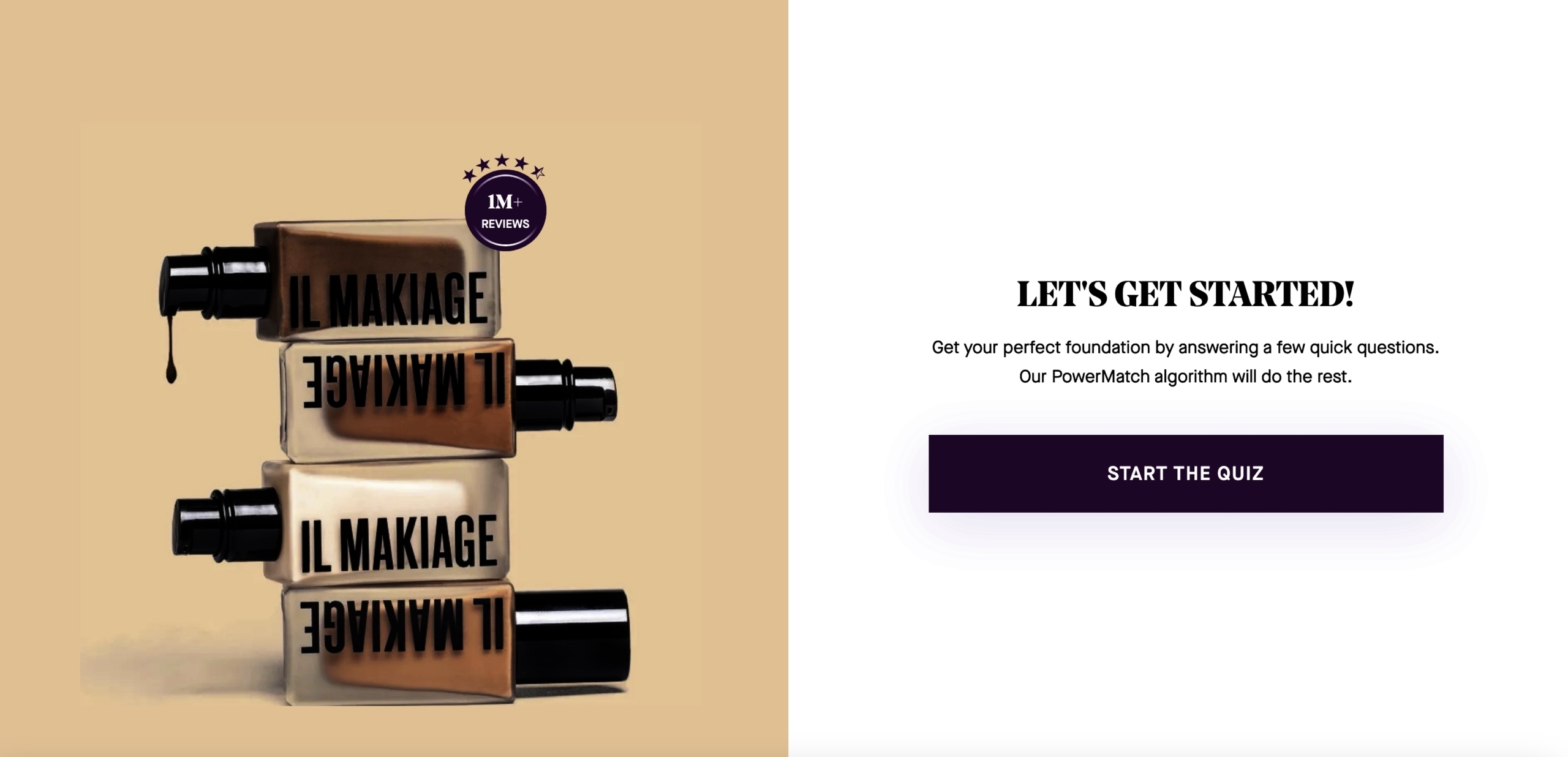
The Try Before You Buy initiative from Oddity's Il Makiage brand is supercharged by its interactive online quiz. This tool significantly lowers barriers to purchase, boosts conversion rates, and relies on extensive data from over 700 skin tone profiles, with more than 25 million completions to date.
Meta's Transformative Algorithm Update
Oddity's operational framework depended substantially on paid digital advertising channels, with Meta standing out as the preeminent platform for beauty marketers. For an extended period, the company adeptly converted incoming traffic using its quiz and TBYB mechanisms, all while keeping customer acquisition costs impressively low. Yet, this efficiency hinged entirely on the stability of Meta's underlying algorithm, leaving Oddity unprepared when significant modifications were introduced.
Marketers dub this pivotal change 'Andromeda.' Implemented toward the end of the previous year, it propelled Meta deeper into AI-driven advertising. The objective was to elevate overall ad efficacy by favoring transactions deemed higher quality and promoting creatives with stronger conversion potential. That said, this evolution poses risks for advertisements flagged as generating suboptimal transaction quality.
The TBYB model inherently encourages trial before purchase commitment, resulting in structurally elevated return rates compared to standard e-commerce transactions. Pascal approximates that return rates in the beauty sector typically hover around 4%, but Oddity's approach likely yields considerably higher figures due to its trial-centric design.
The repercussions of Andromeda were especially severe for Oddity. The company reported unprecedented spikes in acquisition expenses, rendering first-time customer transactions unprofitable and severely impacting its earnings before interest, taxes, depreciation, and amortization (EBITDA). Consequently, Oddity found itself compelled to reevaluate the pace at which it could pursue new customer onboarding.
Compounding the problem is the timing of this disruption. The initial half of the year represents peak investment season for beauty companies in customer acquisition efforts. These investments cultivate fresh customer cohorts primed to fuel repeat business during the latter half of the year. Moreover, the holiday shopping season often constitutes 30% or more of a beauty brand's total annual revenue. Should acquisition costs eventually stabilize, a diminished influx of new customers would inevitably constrain repeat revenue opportunities down the line.
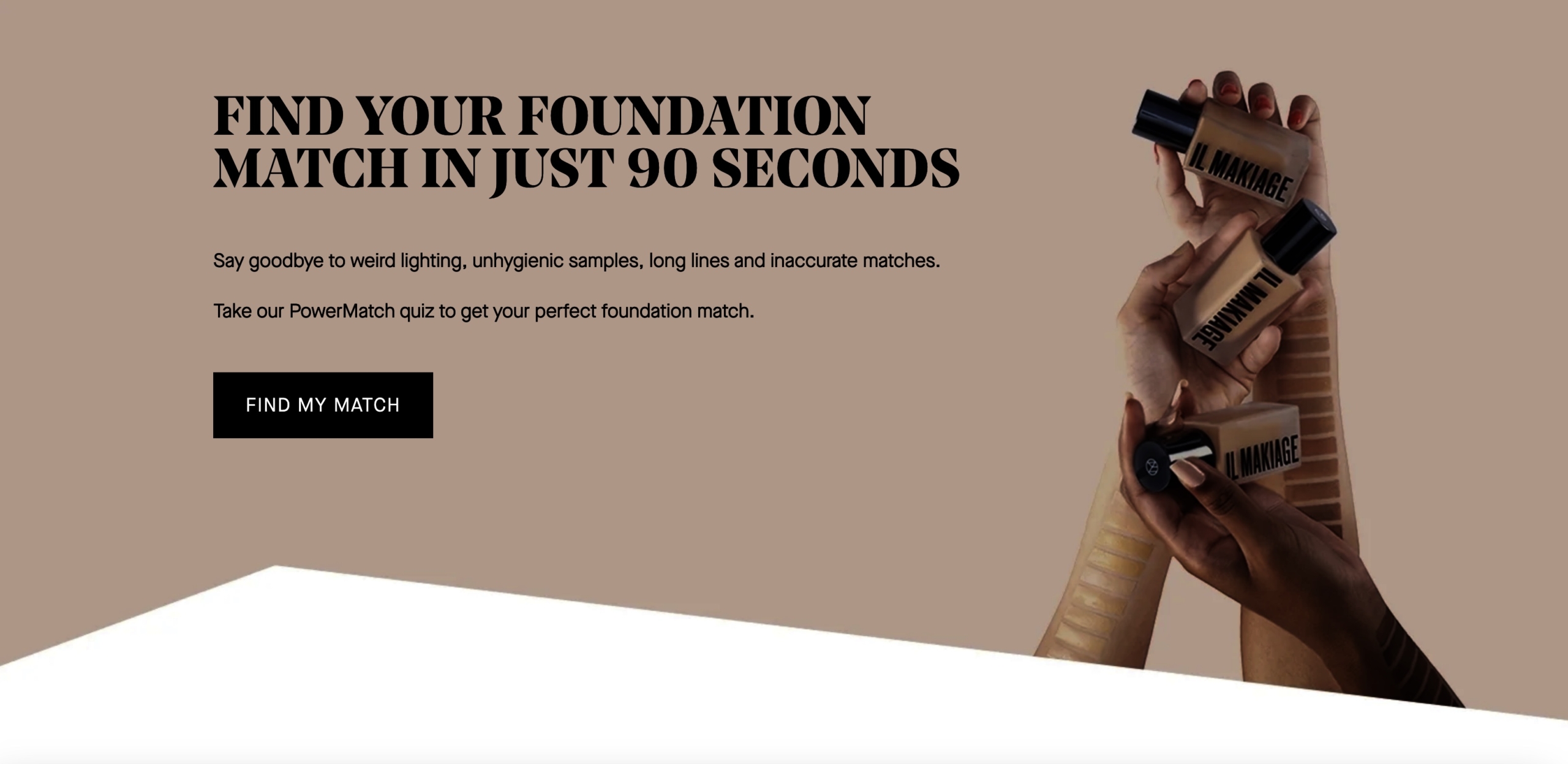
Although Il Makiage's quiz combined with the Try Before You Buy system propelled Oddity's impressive growth trajectory, the elevated return rates baked into this model were likely perceived as indicators of inferior quality by Meta's refined algorithm. This perception contributed substantially to the stock's decline and prompted a strategic pivot in Oddity's customer acquisition tactics.
Oddity's Strategic Responses to the Challenge
Oddity acted with urgency to counteract the upheaval, pinpointing the problem in late January and promptly implementing measures to restore stability. A key aspect of its countermeasures includes recalibrating the emphasis placed on the TBYB offering. During an earnings conference call, CEO Oran Holtzman underscored that TBYB does not constitute a core dependency, affirming the company's flexibility to transition toward conventional purchase processes if circumstances demand it. Despite the heightened costs, Oddity has persisted in channeling resources into customer acquisition.
Preliminary indicators of these adaptations are now apparent. Over recent months, Pascal has noted a noticeable de-emphasis on TBYB promotions across Il Makiage's website, signaling a deliberate reduction in dependence on this model while still retaining it as part of the arsenal.
Holtzman anticipates substantial improvements by the second quarter, with full normalization projected for the third or fourth quarter. He draws parallels to the disruptions caused by Apple's iOS 14 privacy updates—a previous jolt to the digital advertising ecosystem that Oddity adeptly overcame. Bolstering its optimistic long-term perspective, the company launched a $200 million share repurchase initiative.
Drew Fallon, co-founder and CEO of the financial management firm Iris Finance, and author of the Substack newsletter Making Cents, forecasts that Oddity will stabilize at flat growth levels by the fourth quarter. He projects the company achieving $1 billion in revenue alongside $156 million in EBITDA by 2028, marking approximately a 50% uplift from 2025 figures.
Nevertheless, Fallon—who maintains a personal investment in Oddity—warns that this episode could leave enduring scars. 'I anticipate that Oddity will essentially never completely rebound from this setback in terms of its valuation multiple,' he observes. 'There will persistently linger some degree of uncertainty, particularly when roughly 30% of revenue appears subject to external platform whims beyond direct control.'
Broader Implications for the Beauty Industry
The Try Before You Buy concept is not exclusive to Oddity. Although it remains somewhat rare within beauty, several other brands like Irene Forte and Boldify have adopted similar trial-based strategies. However, its niche adoption does not shield the wider industry from the shocks of platform algorithm evolutions.
Pascal emphasizes that any business model at risk of being categorized as lower quality stands vulnerable under the rising tide of automated advertising platforms. He identifies culprits such as elevated product return percentages, unconventional conversion funnels, and erratic user behaviors following ad clicks as common triggers for sudden cost escalations in acquisition.
To safeguard against such pitfalls, Pascal urges brands to vigilantly scrutinize the structure and external perception of their promotional offers. Rather than reacting post-disruption, companies should proactively diversify their customer acquisition channels. If a brand derives 70% of its traffic from Meta alone, he contends, it is a glaring red flag demanding immediate attention and diversification efforts.
The aim here is not to forsake Meta entirely, but to cultivate a balanced portfolio that mitigates overdependence. Emerging avenues such as retail media networks, connected TV advertising, TikTok campaigns, and influencer partnerships offer viable expansions outside Meta's domain.
A persistent hurdle lies in the inevitability of AI-propelled disruptions across platforms, showing no signs of abating. Even longstanding alternatives like affiliate marketing are witnessing cost inflation and stricter guidelines as ecosystems evolve in their evaluation of performance metrics.
Pascal further observes that breakthroughs in generative AI are revolutionizing creative production, allowing brands to generate vast arrays of ad variants swiftly and economically. Yet, he predicts this advantage will prove fleeting. As platforms incorporate countermeasures—including novel protections against AI-synthesized content—the landscape of performance marketing may realign once more, reshaping acquisition economics and prompting brands to rethink resource distribution strategies.
Subscribe to the newsletter
Join 50,000+ others who get our content first. No spam, ever.
About Us
Insights and articles on topics that matter to you.
Topics
- K-Beauty Trends6
- Skin Concerns17
- Product Reviews21
- Anti-Aging & Glow22
- Essentials & Routines31
- Ingredients Lab17
Subscribe to the newsletter
Join 50,000+ others who get our content first. No spam, ever.